PLANTING GRASS SEED:
A Guide for Homeowners
With Step-by-Step Tips
Planting grass seed is comparatively easy, once the necessary preparation is done.
It’s almost like getting on an airplane after packing, rushing and enduring the hassle at the airport. The journey isn’t finished, but you can breathe a sigh of relief.
Now it’s time to sow and grow that lawn!
However...
if you are wondering… “WHAT PREPARATION?”….
Please stop and review this entire series of articles on planting grass.
Don't skip a step and waste all the effort you put into your lawn project. Then return to this point.
If you are ready…
Planting grass seed can be the most temperamental part of the process of growing a new lawn, so it demands your attention to detail. Grass seed can be very particular about how it is treated.
Read on for all the details you need to ensure a successful transition from bare soil to green lawn.
FTC Disclosure:
If you make a purchase via a link on this site, I may receive a small commission on the transaction - at no added cost to you.
Sponsored Links:

WHAT YOU NEED BEFORE YOU START
Check this list as you plan your project, and prior to actually planting grass seed, to help things go as easily as possible. Details for use will follow the list.
- Grass Seed. Select a variety appropriate to the location, and compatible with any existing grass. Check the package for application rates. It is better to have extra on hand rather than not enough, once you start planting grass seed.
- Mulch. Use fine-screened compost or weed-free steer manure. One cubic foot will cover about 50 square feet at ¼” thick. Or use straw (should be weed free, unlike hay) for very large areas. A bale may cover 500 - 1,000 sq. ft. depending on its size and density.
- Rake. A wide landscaper rake or a gardeners bow rake was necessary to prepare and level the soil. Use this or even a leaf rake to mix the seed into the top layer of soil. Large areas may require a drag, like a piece of chain link fence, behind a tractor.
- Lawn Roller. This was used in soil preparation to level the ground. Use it now to press the seed into the soil.
- Irrigation System. If a built-in system is to be used, check it first and make all repairs and adjustments prior to planting the grass seed.
- Hose, soft-spray hose nozzle and hose-end sprinkler. Use a quality sprinkler that will provide even coverage without puddles. (Even with a built in system, some areas may require extra water.)
- Stakes and String or survey marking tape. To restrict unnecessary activity in the seeded area during germination and early growth.
- Personal Items. Hat and/or sunscreen. Ice tea or lemonade. (No beer until finished!) Two or more supervisors who know nothing about planting grass seed so you can feel good when you kick them off the job! (Just kidding!)
SURVEY THE BATTLE FIELD
Before you start the attack, take a look at the condition of the seed bed. This is likely just a cause for concern if you have been proceeding with this project in stages, rather than powering through from start to finish.
SOIL CRUST?
Has the soil crusted over since you finished the final leveling, raking, and rolling? A hard crust will break loose in chunks when you mix seed in with the soil. This can cause uneven results with the spreading and some seed will get buried too deep.
If the soil is crusted, try a light watering to soften the top layer. This works better with some soil types than others, but is the easiest solution. Otherwise you may have to rake again.
SOIL WET?
The soil can be moist, but not muddy. If rain or irrigating too much has left the soil so wet that mud sticks to your shoes, it is too wet for planting grass seed. You can not mix it well with the soil. It is better to wait.
Also, muddy soil will make it impossible to move around when planting grass seed without getting seed stuck to your shoes. It is better to wait.
ANY WEEDS?
Have weeds started to sprout? This can happen easily if it is a multi-weekend project. If you leave the weeds and go ahead with planting the grass seed, the weeds have a head-start.
You may be able to clear the area of new weeds easily with a hula-hoe (swivel head hoe). Then rake the debris off and make sure all is smooth. This will have you planting the grass seed right now.
If you need to spray the weeds to kill them, use a non-selective, glyphosate type killer (like Round-up or equivalent).
You should wait about a week after spraying before planting grass seed. The size of the weeds will determine if they need to still be removed before spreading the seed.
ARE ALL SYSTEMS “GO”?
This project may be at the mercy of your schedule. Do you have the option of selecting one day or time period over another? If so, consider current weather conditions and predictions for the near future.
An extreme hot spell will challenge you to keep the soil and seed moist enough during the germination period. Remember, the seed cannot be allowed to dry out, or it will die.
Rainy conditions could be a blessing to keep the seed moist. But a hard rain or long duration of rain that causes puddles may redistribute the seed to the point of requiring re-seeding later.
In the early spring, rain may keep soil temperatures low. This, plus no sunshine, can slow germination. Extended moist conditions without sufficient warmth can cause seed to rot.
If conditions are good, then proceed.
Sowing the grass seed is probably the first part of your project that is actually enjoyable. Now you feel like you are on your way to having a wonderful lawn. This part is not hard work. However, it will have a major impact on the final result, so take care. Watch the video on this product page to see the spreader in action and new features. Planting grass seed can be done by hand, or with a hand-held spreader, or push-type wheeled spreaders, either a drop style or rotary/broadcast style. Tips for selecting and using spreaders will be supplied in a later article. The ultimate objective is to produce even distribution when planting grass seed. Different grass types vary in size, and have different amounts of seed per pound. The seed container should display how many square feet to cover with each pound of seed. Effective coverage, producing a thick lawn, should be achieved by an application that leaves about 12 to 16 seeds per square inch. IMPORTANT APPLICATION TIP Divide the amount of grass seed to be used into two large portions, with a little bit left over. Planting grass seed requires more than just sowing on top of the soil. Seed germinates best when it is mixed in with, or pressed into, the soil. Some people do both, some do one or the other. The goal is to improve germination by contact with moist soil.
Raking the seed lightly will mix the soil and seed together. Some seed will become buried, while some remains exposed. Seed should not be buried more than ¼” so do not dig into the soil with the rake. Just lightly move over the surface.
Try to develop a technique that will leave the seeds evenly distributed over all areas. Avoid dragging them all to one spot. Work back and forth in a consistent manner until you have mixed the entire lawn area. Look for spots that seem a little thin with seeds after raking. Use the extra bit of seeds that you set aside. Broadcast thinly, by hand, over those areas, or save it for later application.
Some lawn projects may be able to skip the raking. If you have just prepared the soil, and done the final leveling, the soil may be soft enough to just spread the seed and press it into contact with the soil using the lawn roller.
If the soil has crusted over, it is best to rake the seed into the soil. Read the section above on checking the condition of the seed bed.
After planting grass seed, should you roll over the seed or not? The next step is optional, but recommended. Lawn rollers are necessary for leveling the soil when you prepare it. They are just as important for good seed germination. Five dollars a day for rental is a worthwhile investment. If you plan to haul it in the trunk of your car, the handle will stick out the back, so take a blanket and a tie-down to protect your car.
Go over the grass seed planting area with the lawn roller. One pass in any direction is adequate. The roller only needs to be filled about one-fourth to one-third full. This is enough weight to press the seed into the soil
HANDY TIP: An easy way to know the amount of water in the roller. Instead of filling with the plug on top, add water when the plug hole is on the side at a position that corresponds to about 4 o’clock on a dial (at 3 o’clock would be half full). If you choose not to use a roller, the seed may have poor contact with the soil, which makes it more difficult to absorb and hold moisture. It is then essential that you rake the seed into the soil, cover with a mulch, and water more frequently.
A seed cover will help keep the seeds moist during germination, protect them from birds and limit seed movement or erosion. A fine screened compost is the best choice, but most expensive. Steer manure is commonly used. It is cheap, but smells for 2 or 3 days. Be sure any manure product is labeled weed-free. One cubic foot of either will cover about 50 square feet at ¼” thick.
Spread the mulch loosely over the entire area. Try a shaking motion with a shovelful to distribute it. Or toss it by hand from a bucket. A commercial spreader is available to rent and necessary for large lawn areas. It looks like a lawn roller made out of wire mesh.
Straw is more economical for very large areas. The size of bale varies and may cover 500 - 1,000 sq. ft. Shake this loosely over the area. The benefit comes mostly from shading rather than holding moisture, so the straw does not have to completely cover all the soil.
The grass will grow up through it, so break up any clumps of straw. Only use bedding straw, not hay, which may have seeds in it. The straw may look like it will be a permanent mess, but it will soon break down or get chopped up when you mow.
PLANTING THE GRASS SEED,
FINALLY TIME TO SOW!
Apply half of the grass seed, walking back and forth over the entire area.
Then take the second portion, and walk back and forth in a pattern at right angles to your original path.
This will produce better coverage than trying to get it evenly spread in one pass over attempt.
RAKE THE SEED INTO THE SOIL
It may actually work easier to use the back, flat edge of the rake, rather than the tooth edge, for mixing very shallow in the soil.
JUST ROLLING A LAWN...
Just hold the hose up to the hole until it starts to run out. Do this away from the lawn area to prevent a mess.
APPLY SEED COVER OR MULCH
WATER THE GRASS SEED
The first watering after planting grass seed will require more water than it takes later to keep everything moist. You want to get adequate moisture in the soil for the seed to start soaking it up. Once this happens, lighter sprinkling will maintain the moisture.
Use caution with the first watering to avoid puddles or run-off. It may be necessary to use several short watering periods rather than one long cycle. If watering by hand, use a soft spray wand. Be careful about dragging a hose across the seedbed. Avoid moving the seed and mulch out of place.
When watering with a hose-end sprinkler, invest in a quality unit. The cheap ones frequently leak at the connection and will spray in patterns that do not evenly distribute the water. Don’t take a chance on poor seed germination after all the work you’ve put into planting grass seed.
Follow these complete guidelines for Watering New Grass Seed.
It may feel a bit like planting a victory flag after conquering a mountain! Pound some stakes in the ground. Stretch some bright marking tape/survey that is found at hardware stores, or use string and strips of cloth. You’re done!
Putting up a barrier around the area after planting grass seed is optional. If people don’t have access to it, don’t bother. Yet, it is good to have a reminder that you want to limit walking on the planted area.
If you must cross the seedbed, don’t wear lug style soles that can capture the mulch and soil and walk off with your seed. Don’t walk on it if the soil is so moist that you will make depressions. (They’re depressing!)
Planting grass seed may be a small or large project for you. Either way, it isn’t something most people want to repeat, if avoidable. Ensure your chances for success with these tips.
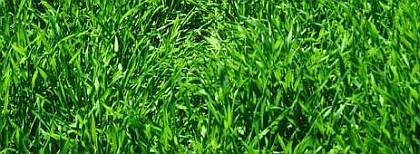
Congratulations! You now know how to plant grass seed! Get out there and become an expert! Make it look like this!
Go to Planting Grass for a full series of articles on this topic. Go to Watering New Grass Seed (as mentioned previously) BRING ON SPRING! Products * Videos * Schedules * Guides
MARK YOUR TERRITORY
WHAT NOT TO DO!
A Stronger, Greener Lawn
Starts Now...
with help from DoMyOwn


