DO LAWN FERTILIZERS HOLD THE SECRETS TO GREEN GRASS?
Are Lawn Fertilizers Confusing To You?
Is the answer to curing a lousy looking lawn just using a more expensive lawn fertilizer? Or applying it more often?
- Why are there so many choices? Which one is best?
- Does it matter how much you use, or when you apply it?
- Why does the neighbor’s yard look better?
Now you can learn the basics for understanding fertilizers and using them correctly. Whether you want to save money, effort, time, or the environment, you'll get all the details you need to accomplish your goal.
The proper selection and application of lawn fertilizers has a huge impact on the condition and appearance of your grass. Learn how to choose and apply the best products like a pro!
The following topics in this series link to detailed articles that will soon turn the neighbors green with envy at your lawn!
FTC Disclosure:
If you make a purchase via a link on this site, I may receive a small commission on the transaction - at no added cost to you.
Sponsored Links
WHY ARE THERE SO MANY CHOICES IN LAWN FERTILIZERS?
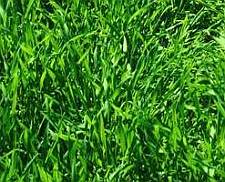
Fertilizer varieties offer important options. For example, you don’t want to use the same type to fertilize new sod as you would for mature grass.
Can you interpret the information on a label? You need to look past the bright colors and pictures on a bag and find out what the product is offering your lawn, rather than what the manufacturer is trying to SELL you!
That knowledge is crucial as a first step, regardless of which final category of lawn fertilizers work for you.
FERTILIZER NUMBERS,
or N-P-K ratios, like 21-3-7, provide critical clues to the ingredients. Discover the importance of each nutrient for your grass. Formulas may be specific to a geographic location or the season of use.
The first step to a smart selection is Understanding Fertilizer Numbers.
CHEMICAL FERTILIZERS
are in the majority as you shop for lawn fertilizers. Usually found in pellet form, these mineral salts must dissolve to release their nutrients.
The quality of the ingredients and the design of the pellet itself can vary significantly.
You get what you pay for. But are you paying for the marketing team, or is the value in the product itself?
Profit from these tips as you Learn About Chemical Fertilizer.
ORGANIC FERTILIZERS
typically use whole, natural materials like alfalfa, cottonseed, kelp or blood meal. These tend to have better long term effects, but are slower to respond.
Plan ahead rather than wait until your grass is starving, and the results will please you. The wonderful impact on soil health may help you decide to choose Organic Lawn Fertilizer.
COMPARE CHEMICAL & ORGANIC
products for the effects on the grass and soil. There are major differences. See the advantages and disadvantages of both before making a selection based only on cost.
Use this exclusive Check-List of 'Pros' vs. possible 'Cons' to investigate The Differences Between Organic Vs. Non-Organic Fertilizers.
HOW DO YOU PICK
THE BEST LAWN FERTILIZER?
Grass needs nutrients. What kind? Basically the same as the rest of your garden plants, but not exactly.
So can you buy one general fertilizer and use it on everything? Yes… but…
before you rush out to do that, consider how grass grows.
Grass has a primary need for nitrogen. Other plants are much more complex and have greater demands. Rather than use all-purpose you might save money on a just-for-grass fertilizer.
Base your selection on these Tips for buying Lawn Fertilizers. (page off line- being revised at this time-until then, see the page linked above for Fertilizer Numbers, which addresses this topic.)
WHEN AND HOW OFTEN
DO YOU FERTILIZE?
Common expectation prompts homeowners to fertilize in spring. Most lawns can probably use some nutrition at this point. It's not likely you can cause harm by doing so.
However, one popular practice deserves mention to assist gardeners in making a wise decision. Many people have heard about using Homemade Tonics to wake-up their grass in the spring, and to give it a boost any time.
Like many other so-called natural or organic ideas, there is potential for harm as well as good, depending on what items are used, and the methods and the timing.
Before you scoff or become a proponent, read this detailed explanation: Are Tonics For Lawns A Good Idea? This will enhance your understanding of the entire fertilizer issue, and help you spend your money and time the best way.
Do It Now?
A calendar cannot tell you if it is time to fertilize. The key is the overall condition of your lawn. If there is an adequate supply of nutrients in the soil, your grass does not need an additional application.
How can you tell? The most accurate way is to do a soil test, once or even twice a year. It isn’t difficult. (And you can’t fail, though your soil might!)
Did you know soil pH affects how well your lawn fertilizers work?
And you may not need to apply anything! It’s worth Learning About Soil Testing. (future article)
Some of you won’t even consider testing your soil. (Perhaps the same group who won’t look at a map when you’re lost?) We’ll still try to help you. You MAY need to fertilize the lawn when:
- your grass looks pale green;
- has traces of yellowing;
- is growing slowly, or not at all;
- it has been more than 8 weeks since the last application.
Since I know you want to do it, the rest of this article will address some practical details.
HOW MUCH FERTILIZER DO YOU USE?
The Application Rates for lawn fertilizers are generally very light. A 50# bag can cover from 5,000 - 10,000 square feet. That’s a large area. It won’t seem like you put enough down to do much good. Trust the rates on the bag and make it go that far.
Is your grass really hungry? Don't respond like you do at a buffet dinner. It’s better to use less and apply more frequently. Put it on too heavy and you risk burning the lawn.
If someone you know just did that, oops! What now? As long as the grass hasn’t died yet, put on lots of water and then more water. Let the water soak in, then water some more.
Gypsum can help flush the salts through the soil. Use 10-20# per 100 sq. ft. A liquid gypsum product is now available from Soil Logic. Water again and again. Watch the crown (center) of the grass plant for the next two weeks to see if new growth appears.
No green in that time? You’ll have to replace the grass.
It's worth taking the time to read the label, and figure it out, don't you think?
HOW DO YOU APPLY THE FERTILIZER?
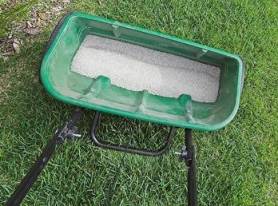
Some people just fling it out like chicken feed. Some are painstakingly precise. Go for a middle of the road approach on this.
Do try to distribute as evenly as possible to avoid irregularities in the color of the grass as the fertilizer works its magic.
A fertilizer spreader is designed to make this chore easier, but it can make the process even more difficult if it doesn't function easily, perform reliably, or you don't know what to do with it.
There are several types of applicators to use.
Hand-held applicators used to work sufficiently well. Unfortunately, the manufacturers have been getting cheap these days, and what was once a simple, useful product is now often a source of frustration. (I'm working on reviews of these.)
Push-type lawn fertilizer spreaders on wheels can be a drop-style or broadcast-style. Each has its place depending on the size and shape of the area you need to cover.
The surrounding area can also impact your choice. A broadcast spreader disperses in a large radius, and the distance it throws is affected by how fast you push it.
A drop spreader does just that, drops the granules directly down below the unit. The concern with this one is to avoid overlap as you go back and forth, and be sure to close the hopper when you stop.
Whichever model you consider getting, check before you buy to see if the manual offers easy to understand settings for common fertilizers. These spreaders are calibrated with different size openings, but without a usable guide, you're flying blind with the application rate.
However you spread it, be aware that some lawn fertilizers can stain concrete and brick, especially if they contain iron. Sweep it off before watering, or wash it into the garden first thing if you water the grass by hand.
WHAT ABOUT SPECIALTY FERTILIZERS
Combination lawn fertilizers, like Weed and Feed, are very popular. Many people select it for the wrong reason. There is only one right (or logical) reason.
It’s more convenient than having to perform two separate chores at two different times.But do you have weeds spread throughout your entire lawn, or just in spots here and there? Is convenience really in your best interest?
Do you want the best weed killing results? Use a separate weed killer, designed for your specific needs, preferably a liquid to spray.
Do you want the best fertilizing results? Use a fertilizer that meets the nutritional requirements of your lawn. You definitely want to read the article on Chemical Fertilizers.
Do understand, fertilizer requirements can sometimes be compatible with other treatments. A combination with insecticide is convenient, and since both ingredients should end up at soil level, they work.
Fertilizer with preemergent added also is a compatible blend. But lawn fertilizers with fungicide are a contradictory approach. Nitrogen can feed certain types of fungus. Treat diseases with an isolated application.
Liquid fertilizer gets promoted as convenient, with super results, super fast. The value of the product compared to your time is questionable.
You pay more per application. It has to be applied more frequently. But there is a circumstance where your lawn could benefit from Liquid Lawn Fertilizers.
If you need a fast greening, maybe for a big event real soon, liquid fertilizer is faster acting than granular. The nutrients are absorbed through the foliage, the grass blades, and you should see noticeable improvement in a few days (depending on temperatures). But it is a short term fix. It quickly dissipates.
ARE YOU READY TO DO IT?
It’s not a secret. Prepare yourself to respond to your lawn’s natural needs and preferences with the best product at the best time. You’ll be proud of the results!
Remember, there is no special formula or magic product that provides a simple one-step solution. A quick fix may be offered, and worth using once or twice, but long term success is a process.
Fertilizing is only one aspect of developing beautiful, healthy grass.
Don’t miss other features on this site to increase your knowledge.
NOT READY?
Don't Want To Do It?
Are you thinking it might be the time to enlist the help of a professional? Be sure to read the following two Guides before you decide.
Hiring a well known lawn care companies or a single person lawn maintenance service can be a blessing or a curse, depending on what you know and who you get.
Straight from an insider in the lawn care industry, these comprehensive free articles will give you information you won't find in any book!
Guide #1 - Lawn Care Services: What Do You Need?
Before You Hire A Lawn Service, Ask Yourself A Few Questions!
Guide #2 - Lawn Care Companies: What Will You Get?
What You Should Know (and Ask) When You Hire Help
Sponsored Links
BRING ON SPRING!
A Stronger, Greener Lawn
Starts Now...
with help from DoMyOwn
Products * Videos * Schedules * Guides
Go back to Separate Fertilizer Topics listed in article.
Go to Top of Page
Go to Home Page of Lawn Care
Sponsored Links
